
No Duty to Homeowners for Incorrect House Elevations
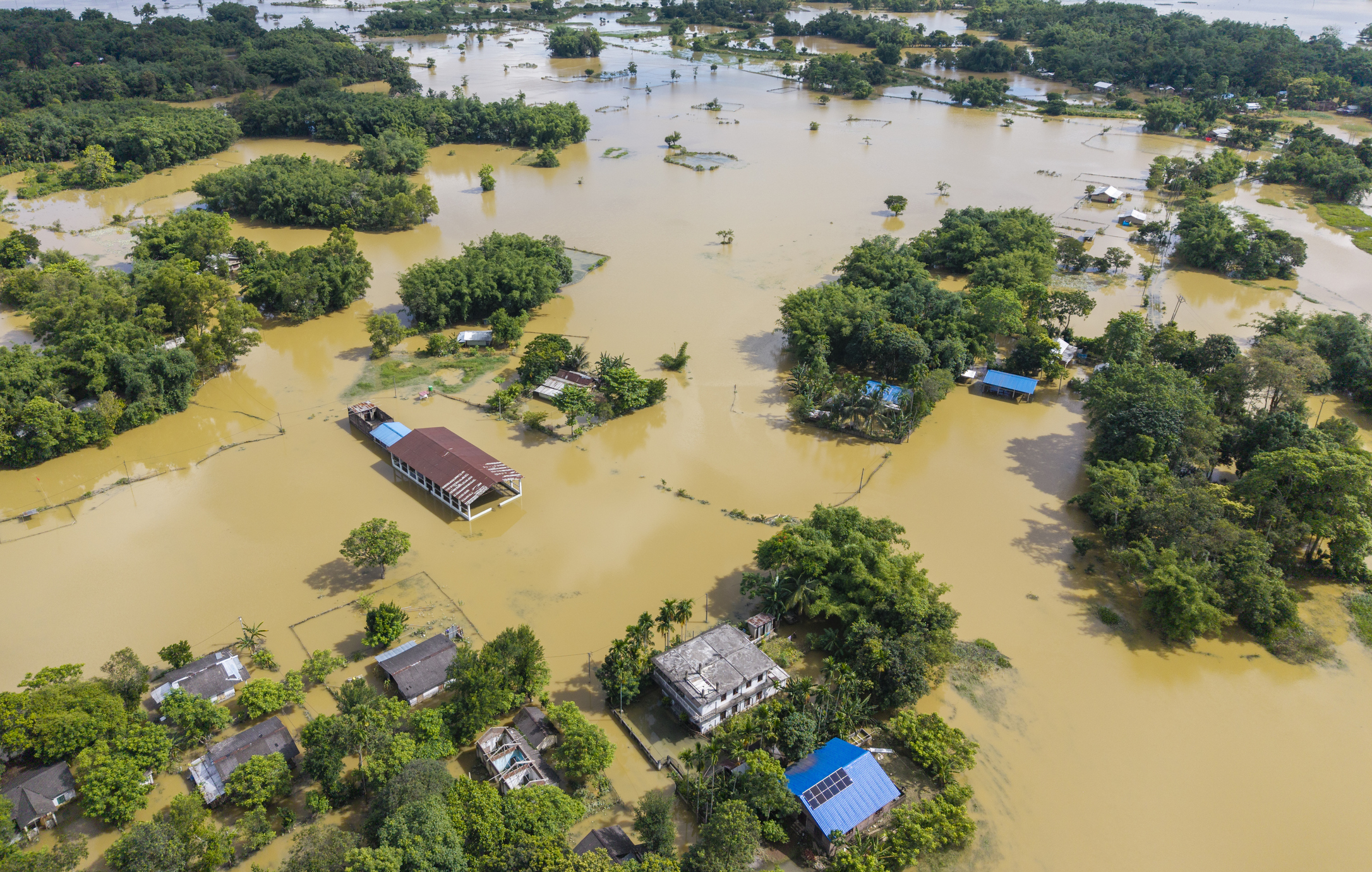
On October 9, 2026, the Houston Court of Appeals evaluated whether a developer and its engineer owed or breached a duty to homeowners to prevent flooding during Hurricane Harvey. In Locke, et al. v. The Woodlands Land Development Company, LP, et al., Cause No. 01-22-00827-CV, 2026 WL 3030616 (Tex. App.—Houston [1st Dist.], October 9, 2026), the Court confirmed summary judgments granted at the trial court level, dismissing the homeowners’ claims for negligence, gross negligence and negligent undertaking against all the defendants.
Negligence Requires Duty and Breach of the Duty
Fundamental to any discussion about negligence is whether the defendant owed a duty to the plaintiff and if such a duty is owed, whether it was breached. For design professionals, if a duty exists, a breach is established by showing that the design professional did not follow the standard of care in delivering its services. The standard of care is now defined by Texas statute as performing services, “with the professional skill and care ordinarily provided by competent architects, engineers, or land surveyors practicing under the same or similar circumstances and professional license.” Tex. Civ. Prac. & Rem. Code §130.0021(a); Tex. Local Gov’t Code §271.904(d)(for government contracts, standard of care may also include the provision of services, “as expeditiously as is prudent considering the ordinary professional skill and care of a competent engineer, architect, or land surveyor”).
The essence of a negligent undertaking claim is that a person who voluntarily undertakes an affirmative course of action for the benefit of another has a duty to exercise reasonable care that the other’s person or property will not be injured by the undertaking. Fort Bend Cnty. Drainage Dist. v. Sbrusch, 818 S.W.2d 392, 395 (Tex. 1991). To establish a negligent undertaking, the plaintiffs must show that: (1) the defendant undertook to perform services that it knew or should have known were necessary for the plaintiffs’ protection, (2) the defendant failed to exercise reasonable care in performing those services, and (3) either (a) the plaintiffs suffered harm because of their reliance on the defendant’s performance or (b) the defendant’s performance increased the plaintiffs’ risk of harm. Nall v. Plunkett, 404 S.W.3d 552, 555-56 (Tex. 2013).
The Issues Before the Houston Court of Appeals
In Locke, the Houston Court of Appeals was asked to determine whether any fact issues existed that would prevent dismissal of the homeowners’ claims against the developer, The Woodlands Land Development Company, and its retained engineer, LJA Engineering, Inc. and its employee, James Bowles. The Houston Court examined whether the developer and engineer owed a duty to the homeowners and then whether the duty was breached.
The Houston Court of Appeals’ Opinion
In October 1994, a subtropical storm dumped between 20 and 30 inches of rain on the Woodlands development, including the Timarron subdivision, north of Houston. The subdivision is bordered on its northern and western sides by Spring Creek. The homeowners alleged that the October 1994 storm reached flood levels associated with a 500-year storm.
After that storm, the Woodlands Land Development Company began developing the Timarron subdivision, with prepared lots being sold to homebuilders which would then sell the house and lot to homeowners. Harris County’s then-regulatory standards included a requirement that structures in the 100-year floodplain be built 18 inches above the floodplain. The Woodlands Land Development Company decided to recommend that third-party builders build their houses in Timarron six inches above “the flood of record level” from the October 1994 storm.
To determine the “flood of record level,” The Woodlands Land Development Company hired a third-party engineering firm, Pate Engineers, Inc. Pate’s flood of record level determination was then given to LJA Engineering to set minimum slab elevations of 6 inches above that level. The homeowners allege that Pate incorrectly determined the flood of record level, resulting in their houses not being built to the correct elevations.
In August 2017, Hurricane Harvey dumped about 25 inches of rain over the Spring Creek watershed. The homeowners alleged this was about the same amount of rain that fell during the October 1994 flood, though it produced slightly lower flood levels along Spring Creek than in 1994. During and after Hurricane Harvey, the homeowners’ houses flooded, resulting in the homeowners undertaking extensive repairs and having to relocate.
The homeowners sued The Woodlands Land Development Company, LJA Engineering, and Bowles for negligence, gross negligence, and negligent undertaking. The homeowners alleged that The Woodlands Land Development Company owed them a “duty to exercise reasonable care in developing Timarron, particularly with regard to the flood-mitigation efforts it undertook.” The homeowners alleged that LJA Engineering and Bowles, failed to use ordinary care in the analysis, design, and engineering of the Timarron subdivision and failed to use ordinary care in setting minimum slab elevations for homes to be built in the subdivision.
The Houston Court of Appeals affirmed the summary judgments for The Woodlands Land Development Company, LJA Engineering and Bowles, refusing to create a new common-law duty to the homeowners. After concurring with other Texas appellate courts that the creation of a new common-law duty is a task better suited for the Texas Supreme Court, see Black ± Vernooy Architects v. Smith, 346 S.W.3d 877, 881 (Tex. App.—Austin 2011, pet. denied), the Houston Court analyzed whether it should throw caution to the wind and create one anyway.
In weighing the factors necessary to create a new legal duty—the risk involved, the foreseeability of the risk, and the likelihood of injury against the social utility of the actor’s conduct, the magnitude of the burden of guarding against the injury, and the consequences of placing the burden on the defendant, Pagayon v. Exxon Mobil Corp., 536 S.W.3d 499, 503-04 (Tex. 2017)—the Court found that the homeowners had only presented a fact issue as to one of the factors, foreseeability, with regard to the Woodlands Land Development Company. Evidence of only one factor alone was insufficient to support creating a new duty.
The Houston Court of Appeals also affirmed summary judgment for LJA Engineering and Bowles. The Court, in looking at the relationship between the LJA Engineering, Bowles and the homeowners as a “significant consideration” in determining the existence of a duty of care, decided not to impose a new duty on the engineers. Notably, neither LJA Engineering nor Bowles was involved in homeowners’ purchases of their properties or with the building of the homes or with determining the final lot grading or slab elevations. As for the negligent undertaking claim, the Court held that the homeowners failed to provide evidence that LJA Engineering and Bowles fell below the standard of care in setting the minimum slab elevations six inches above Pate’s 194 flood of record level. As LJA Engineering argued, its client, The Woodlands Land Development Company, never retained it and therefore, it never undertook checking whether Pate’s flood of record level was correct.
The Impact of the Locke’s Court Holding
Implicit in the Court’s holding is the attenuated role both the developer and its engineer played in determining the final grading of the lots or elevation of the floor slabs. Neither The Woodlands Land Development Company nor LJA Engineering sold the lots to the homeowners, were retained by the homebuilders to evaluate the design or construction, or had any relationship to the homeowners.
The Woodlands Land Development Company retained Pate, an engineer who allegedly miscalculated the October 1994 flood of record level. There was no evidence that Pate was incompetent or that the Woodlands Land Development Company in some way was negligent for retaining him or relying on his data. The same is true for LJA Engineers and Bowles, but with the Court further seemingly recognizing that engineers, within certain limits, are entitled to rely on data from other design professionals, in this instance Pate, without undertaking the duty to independently verify the accuracy of the data.
Cites
Tex. Civ. Prac. & Rem. Code §130.0021(a)
Tex. Local Gov’t Code §271.904(d)
Locke, et al. v. The Woodlands Land Development Company, LP, et al., Cause No. 01-22-00827-CV, 2026 WL 3030616 (Tex. App.—Houston [1st Dist.], October 9, 2026)
Black ± Vernooy Architects v. Smith, 346 S.W.3d 877, 881 (Tex. App.—Austin 2011, pet. denied)
Pagayon v. Exxon Mobil Corp., 536 S.W.3d 499, 503-04 (Tex. 2017)
Fort Bend Cnty. Drainage Dist. v. Sbrusch, 818 S.W.2d 392, 395 (Tex. 1991)
Nall v. Plunkett, 404 S.W.3d 552, 555-56 (Tex. 2013)
Legal Disclaimers
This blog is made available by Gerstle Snelson, LLP for educational purposes and to provide general information about the law, only. Neither this document nor the information contained in it is intended to constitute legal advice on any specific matter or of a general nature. Use of the blog does not create an attorney-client relationship with Gerstle Snelson, LLP where one does not already exist with the firm. This blog should not be used a substitute for competent legal advice from a licensed attorney.
©Gerstle Snelson, LLP 2026. All rights reserved. Any authorized reprint or use of this material is prohibited. No part of this blog may be reproduced or transmitted in any form or by any means, electronic or mechanical, including photocopying, recording, or by any information storage or retrieval system without the express written permission of Gerstle Snelson, LLP.
