

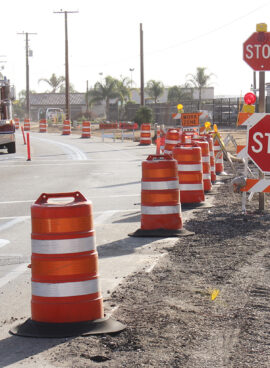
Appeals Court Affirms $14 million Verdict for Construction Truck Accident
A Texas Court of Appeals recently upheld a $14 million verdict against a cellphone tower construction company and its employee, reasoning that the evidence was legally and factually sufficient to support the jury’s findings and the awarded damages was within the jury’s discretion.
Q.A. Services, LLC (QA) builds cell phone towers. Kenneth Porter is a co-owner of QA and owns several trucks that were driven to jobsites by QA employees. Roger Landry, a former employee of QA, would travel to the jobsites where he helped build the cell phone towers. In December 2018, he drove to a jobsite near C

Policyholder Must Repay Subcontractor Default Insurer
May a subcontractor default insurer recover sums paid to its policyholder when an arbitration panel finds that the policyholder is partially responsible for the costs to cure the default? In Lecesse Const. Serv., LLC v. Hudson Excess Ins. Co., 85 NY Misc. 1271(Supreme Court of New York, 2025), a New York trial court held that the insurer had a right to recover over $5 million from the named insured/policyholder.
In Lecesse, Lecesse was the construction manager and general contractor for construction of a retirement community in Florida. Lecesse entered into a Master Subcontract Agreement wit


Property Owner Not Liable for Contractor’s Injury
Is a property owner liable for an electric shock injury to an independent contractor working on its premises? The Fifth Circuit Federal Court of Appeals recently held, no.
In Rose v. Nissan, North America, Inc., Rose allegedly sustained injuries arising from an electric shock in April 2022 while working as an employee of Automated Power, Inc. (“Automated Power”), an independent contractor to Nissan. Nissan had hired Automated Power to repair a partial outage at its Canton, Mississippi car manufacturing plant in March 2022. Rose argued that Nissan controlled “access” to a cubicle area w

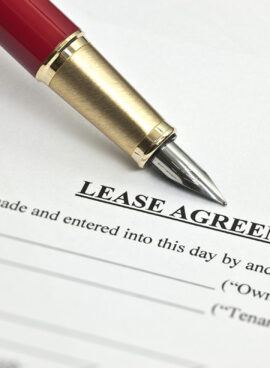
Wrongful Termination of Lease for Alleged Construction Defects
Is a tenant justified in terminating a lease for a build-to-suit building when unidentified odors prevent beneficial occupancy? In Wise Development, LLC v. General Services Administration, the United States Civilian Board of Contract Appeals (CBCA) recently held, no. How did the CBCA reach that conclusion and what lessons does it provide for other projects in the federal government and civilian sectors?
In Wise Development, the GSA entered into lease with Wise a build-to-suit, single tenant building in Hickory, North Carolina for use as a service center by the U.S. Social Security Administrati

Reexamining Delay and Price Mitigation in the Face of Tariffs
There has been a lot of talk about tariffs in the recent news cycle since the implementation of them by the current administration and with-it heightened anxiety on wallets. However, since the Covid pandemic, the construction industry has faced large-scale disruptions to the supply chain, delays in manufacturing and material shipments, price escalations, and impacts on the labor force. Amazingly, Texas, for the most part and with many exceptions, has met these challenges and projects across the state are continuing to get built to the satisfaction of most of the contracting parties. That is

