
All Tornados are Windstorms, But not Vice Versa
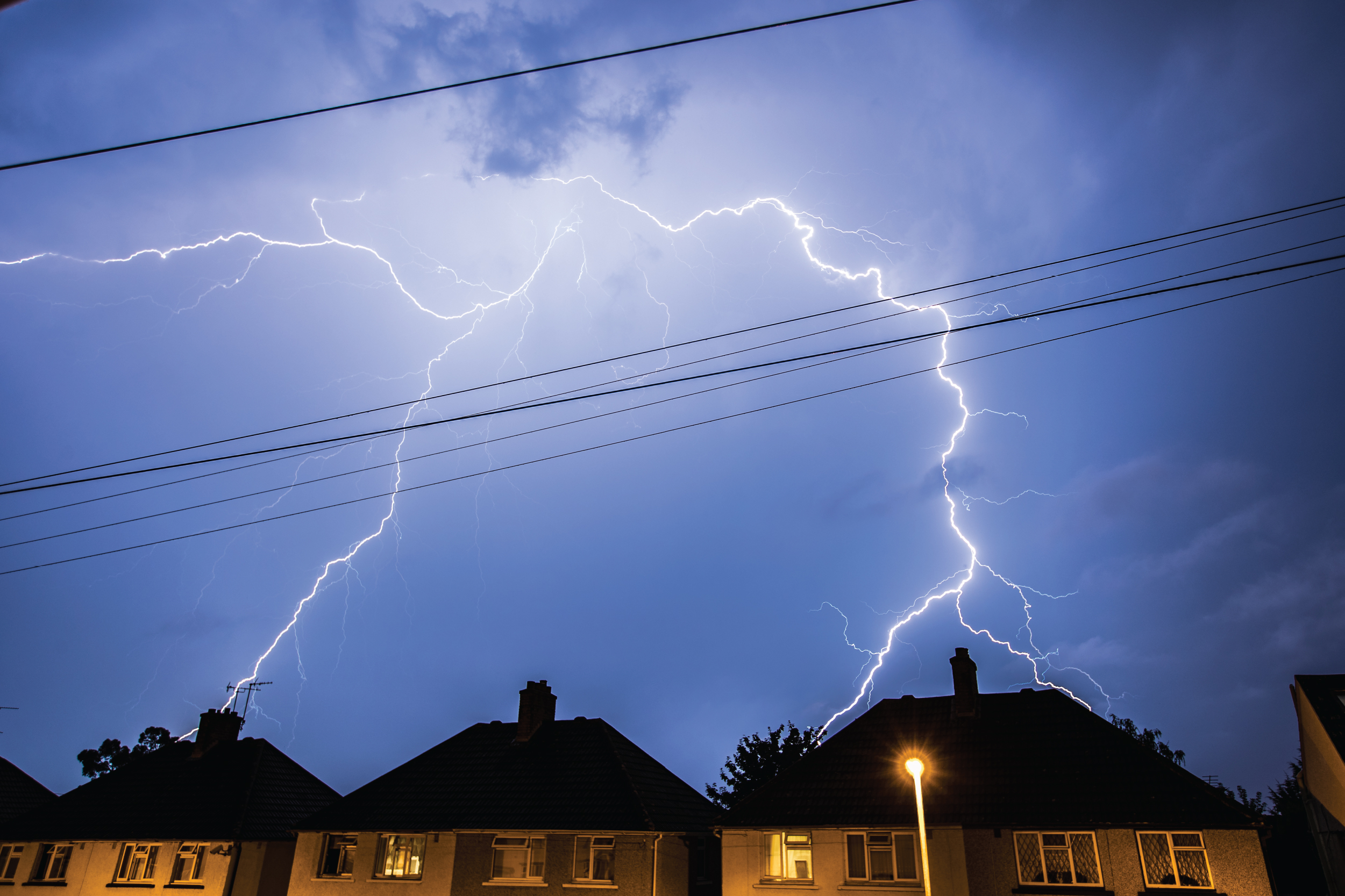
Recently, the Texas Supreme Court examined in Privilege Underwriters Reciprocal Exchange v. Mankoff, 733 S.W.3d 1 (Tex. 2025), whether a tornado is a windstorm.
The Dispute
The Mankoff’s suffered a loss of their home due to a tornado. Privilege Underwriters Reciprocal Exchange (PURE) accepted the claim and paid for damages, but claimed there was a higher deductible because the tornado was a windstorm. The term “windstorm” was not defined by the insurance policy. The Mankoffs claimed that the term windstorm was distinct from a tornado and because the word “tornado” was not used in the policy, it could not be a windstorm”. PURE claimed that under normal dictionary definitions a windstorm as “a storm marked by high winds and little precipitation.”
At the trial court level, PURE was granted a summary judgment as the judge found that tornados are windstorms. The Dallas Court of Appeals, however, reversed and found that the term “windstorm”, may or may not include a “tornado” and therefore was ambiguous. The issue before the Texas Supreme Court what the word “windstorm” meant.
Defining Windstorm and Tornado
Finding that the policy language did not provide a technical definition for the terms “windstorm” and “tornado”, the Court gave the terms their plain, ordinary meaning. The Texas Insurance Code and Texas Property Code provided little guidance as neither defined the terms. Instead, the Court turned to the definitions of “windstorm” and “tornado” provided by several different dictionaries, including the Merriam Webster and American Heritage dictionaries. The common denominator of the definitions for “windstorm” was, “a storm with violent, strong winds but little or no precipitation.” The Court found that the key feature of a “tornado” is, a “violent, rotating wind”.
The Texas Supreme Court Distinguishes Tornados and Windstorms
Is a “tornado” a “windstorm” and vice versa? The Court held that, “not all windstorms contain tornadoes, but all tornadoes are windstorms, regardless of whether the broader weather event includes precipitation.” As such, the term “windstorm” the homeowners insurance policy, when given its ordinary meaning, encompasses a tornado. Accordingly, the trial court correctly granted summary judgment for PURE on the ground that the Mankoffs’ covered claim is subject to the “Windstorm or Hail” deductible in their homeowners’ policy.
Why this Decision Matters
PURE v. Mankoff re-enforces the concept that in all contracts, not just insurance policies, undefined terms can create ambiguities that may cost more in attorneys’ fees to define than the amount in dispute. The PURE case took more than 5 years from the time it was filed until decided by the Texas Supreme. The amount in dispute was a deductible limit of $87,156.
Privilege Underwriters Reciprocal Exchange v. Mankoff, 733 S.W.3d 1 (Tex. 2025)
Texas Insurance Code
Texas Property Code
Legal Disclaimers
This blog is made available by Gerstle Snelson, LLP for educational purposes and to provide general information about the law, only. Neither this document nor the information contained in it is intended to constitute legal advice on any specific matter or of a general nature. Use of the blog does not create an attorney-client relationship with Gerstle Snelson, LLP where one does not already exist with the firm. This blog should not be used a substitute for competent legal advice from a licensed attorney.
©Gerstle Snelson, LLP 2026. All rights reserved. Any authorized reprint or use of this material is prohibited. No part of this blog may be reproduced or transmitted in any form or by any means, electronic or mechanical, including photocopying, recording, or by any information storage or retrieval system without the express written permission of Gerstle Snelson, LLP.
